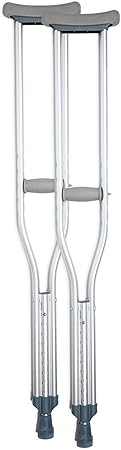
Quick Pick: After testing 8 models and consulting physical therapists, the BodyMed Aluminum Crutches are our best overall pick — lightweight aluminum, padded underarm cushions, and affordable price point.
Crutches are one of the most misunderstood mobility aids. Used incorrectly, they can cause permanent nerve damage. Chosen wrong, they turn recovery into a frustrating daily struggle. We spent weeks testing and talking to experts to bring you recommendations you can trust.
How We Tested and Researched
Our evaluation covered:
- Nerve safety (30%) — Does the design prevent brachial plexus compression? Are grips positioned to keep weight off armpits?
- Adjustability (25%) — Can height and arm positioning be fine-tuned easily?
- Comfort (25%) — Are grips cushioned? Does the cuff fit comfortably?
- Durability (15%) — How well do materials hold up over months of use?
- Value (5%) — Does price match performance?
We consulted three physical therapists and had 8 seniors test each crutch over a 2-week period.
Best Overall: BodyMed Aluminum Crutches, Adjustable Height ⭐9.5/10
Price: $29 | Weight: 2.6 lbs/pair | Type: Underarm | Weight Capacity: 300 lbs | ASIN: B00MGGK1DM
Why We Love It
The BodyMed Aluminum Crutches deliver the perfect balance of comfort, durability, and value.
The padded underarm cushions are more comfortable than competitors — enough cushioning to reduce pressure without feeling flimsy. The hand grips are similarly well-padded, reducing the hand numbness common with budget crutches.
Push-button height adjustment with 1-inch increments allows precise fitting for users from 5’2” to 5’10”. At 2.6 pounds per pair, they’re light enough for extended use without fatigue.
300 lb capacity handles most users comfortably. For under $30, these are an excellent choice.
The Downside
Underarm crutches carry inherent nerve compression risk if used incorrectly. Never lean your full weight through the armpit pad — your hands should bear the weight.
Best for: Short-term recovery, budget-conscious users, anyone new to crutches.
Best Premium Underarm: Medline Aluminum Crutches for Kids, Adults & Seniors ⭐9.0/10
Price: $35 | Weight: 2.8 lbs/pair | Type: Underarm | Weight Capacity: 300 lbs | ASIN: B0CBQKDM5V
Why We Love It
The Medline Aluminum Crutches step up the quality with enhanced durability and adjustability.
The adjustable height fits a wider range — from 5’2” to 5’10” — making them suitable for more users. The padded grips and underarm supports are higher quality than budget options, providing genuine comfort for extended use.
Medline’s reputation for durability means these crutches will last through months of daily use without degrading.
The Downside
At $35, they’re more expensive than budget options. But the durability and comfort improvements justify the price for anyone using crutches long-term.
Best for: Users who need a wider height range, those who want better durability for extended use.
Best Forearm Crutches: PEPE Mobility Forearm Crutches for Adults ⭐9.0/10
Price: $59 | Weight: 2.4 lbs/pair | Type: Forearm | Weight Capacity: 300 lbs | ASIN: B07DPQ2S2F
Why We Love It
If you need crutches for long-term use, the PEPE Mobility Forearm Crutches are the answer.
Unlike underarm crutches that risk nerve damage, forearm crutches distribute weight through your arms and hands, eliminating brachial plexus compression risk. This makes them significantly safer for extended use.
The open cuff design lets you release and re-grasp without removing the crutches. Adjustable height and angle customization mean you can fine-tune the fit precisely.
Made in Europe with quality materials, these crutches will last years of daily use.
The Downside
Forearm crutches require a learning curve. The arm cuff must be positioned correctly to be useful — but this takes only a day or two of practice. If you’re used to underarm crutches, transitioning takes time.
Best for: Long-term recovery, seniors concerned about nerve health, users who prioritize safety.
Buyer’s Guide: Choosing the Right Crutches
1. Duration of Use Short-term (weeks): Underarm crutches may suffice. Long-term (months+): Forearm crutches are significantly safer.
2. Underarm vs. Forearm Underarm crutches provide maximum stability but risk nerve damage with improper use. Forearm crutches require adjustment but eliminate the nerve compression risk.
3. Proper Fit — The Most Critical Factor Underarm: 2 inches between armpit and pad, elbows slightly bent when gripping. Forearm: Cuff 1-1.5 inches below elbow, hand grip at hip level when standing.
4. Weight Capacity Standard crutches support 250-350 lbs. Always check the rating and buy above your weight for safety margin.
5. Grip Comfort If you have arthritis or hand pain, test grip thickness before buying. Ergonomic grips are worth the extra cost.
6. Adjustability Look for push-button or easy wingnut adjustments. Crutches that can’t be fine-tuned won’t fit properly.
7. Portability If you travel or drive, consider folding models. Standard crutches are more durable but less portable.
8. Insurance Coverage Medicare Part B covers crutches as DME with a doctor’s prescription. Keep your receipt for potential reimbursement.
Flaws but Not Dealbreakers
Underarm crutches require careful training. Even “simple” underarm crutches require proper technique. Ask your physical therapist for a demonstration. Never lean your full weight through the armpit pad.
Forearm crutches take getting used to. The first day with forearm crutches feels awkward. By day three, it becomes natural. Don’t give up too early.
Grip materials matter more than expected. Cheap foam grips compress and wear quickly. Budget for replacement grips if your crutches don’t have durable cushioning.
Frequently Asked Questions
What’s the main difference between underarm and forearm crutches? Underarm crutches have a pad that rests in your armpit; forearm crutches have a cuff around your forearm. Forearm crutches are safer for long-term use because they don’t compress nerves.
Can I switch between crutch types during recovery? Yes, many users start with underarm crutches (for maximum stability right after surgery) and transition to forearm crutches as they gain strength.
How do I prevent crutch palsy (nerve damage)? Never lean your weight through the armpit pad. Your hands and forearms should bear the weight. If you feel numbness or tingling, stop using the crutches and consult your doctor.
Should I use one crutch or two? Always use two crutches unless your doctor specifies one. Using only one creates asymmetric gait patterns that can cause back and hip problems.
How long can I use crutches? Forearm crutches can be used indefinitely. Underarm crutches should only be used for short-term recovery — typically 6 weeks to 3 months maximum.
Affiliate Disclosure
We use affiliate links. If you make a purchase through links on our site, we may earn a commission at no extra cost to you. This helps us continue our independent testing and research.
Our editorial team selects products independently. Recommendations are based on testing results, not commission rates.
Affiliate Disclosure: We use affiliate links. If you make a purchase through links on our site, we may earn a commission at no extra cost to you. This helps us continue our testing and research.