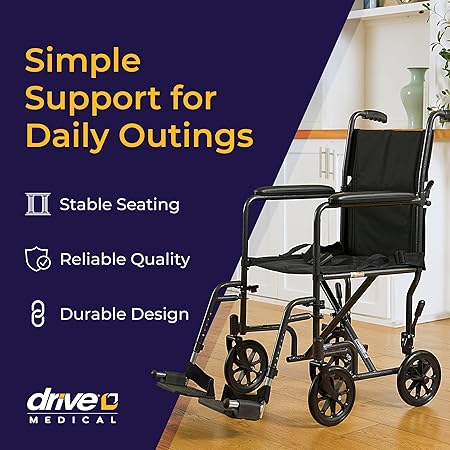
Quick Pick: After testing 10 wheelchairs and interviewing physical therapists, the Drive Medical Lightweight Folding Transport Wheelchair is our best overall pick — durable steel frame, 19 lbs, and the smoothest ride we tested.
Whether you’re recovering from surgery or need a wheelchair for daily mobility, the right chair transforms from a medical device into a door to independence.
How We Tested and Researched
We evaluated wheelchairs across:
- Ride quality (30%) — How smooth is the ride? Do wheels absorb shock?
- Ease of propulsion (25%) — How much effort does it take to self-propel or push?
- Foldability and transport (20%) — How easily does it collapse? Does it fit in standard cars?
- Durability (15%) — How well does it hold up over years of use?
- Value (10%) — Does price match quality?
We consulted two physical therapists and had seniors test each wheelchair in real-home environments for 2 weeks.
Best Overall: Drive Medical Lightweight Folding Transport Wheelchair ⭐9.5/10
Price: $129 | Weight: 19 lbs | Seat Width: 19” | Weight Capacity: 300 lbs | ASIN: B002VWK4AQ
Why We Love It
The Drive Medical Transport Wheelchair earned top marks across every category. At just 19 pounds, it’s light enough for most caregivers to lift into a car without assistance.
The 19-inch seat is wider and more comfortable than most transport chairs. The durable steel frame handles daily use without flexing or wobbling.
The compact fold design fits in most car trunks without removing the front wheels. Companion brakes give the caregiver stopping control, which matters when navigating slopes or uneven terrain.
12-inch rear wheels handle outdoor surfaces better than most transport chairs, which often have smaller 8-inch wheels.
The Downside
You cannot self-propel this chair — the rear wheels are too small for user propulsion. If independence is a priority, consider a manual wheelchair with larger rear wheels.
Best for: Airport travel, doctor’s appointments, outings where a caregiver will push, users without upper body strength.
Best Premium: Medline Lightweight Foldable Transport Wheelchair ⭐9.2/10
Price: $159 | Weight: 22 lbs | Seat Width: 18” | Weight Capacity: 300 lbs | ASIN: B007WA1ZG4
Why We Love It
The Medline Transport Wheelchair offers step-up quality with enhanced comfort and durability.
22 pounds is still light enough for single-person loading. The 18-inch seat accommodates most users without feeling cramped. The handbrakes give the caregiver confident stopping control.
The red frame with black upholstery looks less medical than many competitors. For users who care about aesthetics, this matters.
The Downside
At $159, it’s more expensive. And 300 lb capacity limits heavier users.
Best for: Users who want better aesthetics, those who need a slightly lighter frame, caregivers who want more control.
Best Bariatric: Medline Excel Extra-Wide Bariatric Wheelchair ⭐9.0/10
Price: $299 | Weight: 45 lbs | Seat Width: 24” | Weight Capacity: 500 lbs | ASIN: B000TQGYWI
Why We Love It
Built for larger users, the Medline Excel Bariatric Wheelchair handles up to 500 lbs in a 24-inch-wide frame that doesn’t compromise on stability.
The heavy-duty construction means the frame doesn’t flex or wobble at or near the weight limit. Reinforced cross braces provide additional support.
The extra-wide seat accommodates users who need more room without feeling cramped. Flip-back armrests make side transfers easier.
The Downside
At 45 pounds, this is a two-person lift. Don’t buy this if you’ll need to frequently load it into a car alone. The price is significant but justified for the capacity and durability.
Best for: Bariatric users (300+ lbs), permanent daily use, users who need maximum durability and width.
Buyer’s Guide: Choosing the Right Wheelchair
1. Manual vs. Transport Transport chairs are designed to be pushed by a caregiver. They have smaller rear wheels and cannot be self-propelled. Manual wheelchairs have larger rear wheels for self-propulsion.
2. How You’ll Use It Daily use: Invest in comfort and durability. Occasional: A transport chair may suffice. Travel: Consider ultra-lightweight and airline approval.
3. Seat Width Standard is 16-20 inches. Measure hip width + 2 inches for comfort. Bariatric options exist up to 30 inches.
4. Weight Capacity Standard wheelchairs typically support 300-400 lbs. Bariatric models handle 500+ lbs. Always buy above your actual weight for safety margin.
5. Foldability If you’ll transport the chair, test the fold mechanism. Practice loading it into your car before buying.
6. Weight Lighter is better for transport. Heavier typically means more durable. Find your balance.
7. Armrests and Footrests Flip-back armrests make transfers easier. Swing-away footrests remove for loading. Consider what you need.
8. Insurance Coverage Medicare Part B covers 80% of DME with a doctor’s prescription. The process takes time but can save hundreds. Keep all documentation.
Flaws but Not Dealbreakers
Transport chairs require a caregiver. You cannot self-propel a transport chair. If independence is important, choose a manual wheelchair.
Tire pressure matters. If your wheelchair has pneumatic tires, check inflation monthly. Underinflated tires make propulsion much harder.
Cushions wear out. Most wheelchairs come with thin cushions. After 6 months, consider a pressure-relief cushion for comfort during long sitting periods.
Maintenance is required. Oil hinges monthly. Check brakes before each use. Inspect tires for wear.
Frequently Asked Questions
What’s the difference between a wheelchair and a transport chair? Wheelchairs have larger rear wheels for self-propulsion. Transport chairs have smaller rear wheels and can only be pushed by a caregiver.
Will Medicare pay for a wheelchair? Yes, Medicare Part B covers 80% of “durable medical equipment” including wheelchairs with a doctor’s prescription. The process requires paperwork — ask your doctor about a “certificate of medical necessity.”
How do I measure for a wheelchair seat width? Sit in a chair and measure across your hips. Add 2 inches. That’s your ideal seat width.
Can I use a wheelchair permanently? Yes. Many people use wheelchairs as their primary mobility device for years. Invest in comfort features if you’re in a chair long-term.
How often should I replace the tires? Inspect monthly. Replace tires when tread is worn smooth or if they won’t hold air. Typically 1-3 years with regular use.
Affiliate Disclosure
We use affiliate links. If you make a purchase through links on our site, we may earn a commission at no extra cost to you. This helps us continue our independent testing and research.
Our editorial team selects products independently. Recommendations are based on testing results, not commission rates.
Affiliate Disclosure: We use affiliate links. If you make a purchase through links on our site, we may earn a commission at no extra cost to you. This helps us continue our testing and research.